
RECRUITLY
RECRUITLY
RECRUITLY
PRODUCT NAME
PRODUCT NAME
RECRUILTY
RECRUILTY
RECRUILTY
PROJECT MODE
PROJECT MODE
Personal Project
Personal Project
Personal Project
PLATFORM
PLATFORM
Mobile App
Mobile App
Mobile App
TARGET AUDIENCE
TARGET AUDIENCE
Job Applicants
Job Applicants
Job Applicants
ROLE
ROLE
Product Designer
Product Designer
Product Designer
TIMELINE
TIMELINE
3 Weeks
3 Weeks
3 Weeks

Designing a job search experience that helps people move forward — not just apply
Designing a job search experience that helps people move forward — not just apply
Overview
Overview
I didn’t start this project because I wanted to design a better job board. If anything, I started it because I felt like job boards weren’t really solving the problem they claimed to solve.
At some point, I noticed a pattern — not just in others, but in myself too. Job searching felt like a loop of effort without clarity. You apply, you wait, you second-guess your resume, you tweak a few things, and then you repeat the cycle. And the frustrating part is, you’re never quite sure if you’re getting better or just doing more.
So instead of building a product that helps users find jobs, I focused on designing something that helps them progress through the journey of becoming hireable.
What came out of that was a mobile-first, AI-powered, gamified experience that brings together job discovery, application tracking, career tools, and learning — but more importantly, connects them into a system that actually supports users over time.
I didn’t start this project because I wanted to design a better job board. If anything, I started it because I felt like job boards weren’t really solving the problem they claimed to solve.
At some point, I noticed a pattern — not just in others, but in myself too. Job searching felt like a loop of effort without clarity. You apply, you wait, you second-guess your resume, you tweak a few things, and then you repeat the cycle. And the frustrating part is, you’re never quite sure if you’re getting better or just doing more.
So instead of building a product that helps users find jobs, I focused on designing something that helps them progress through the journey of becoming hireable.
What came out of that was a mobile-first, AI-powered, gamified experience that brings together job discovery, application tracking, career tools, and learning — but more importantly, connects them into a system that actually supports users over time.
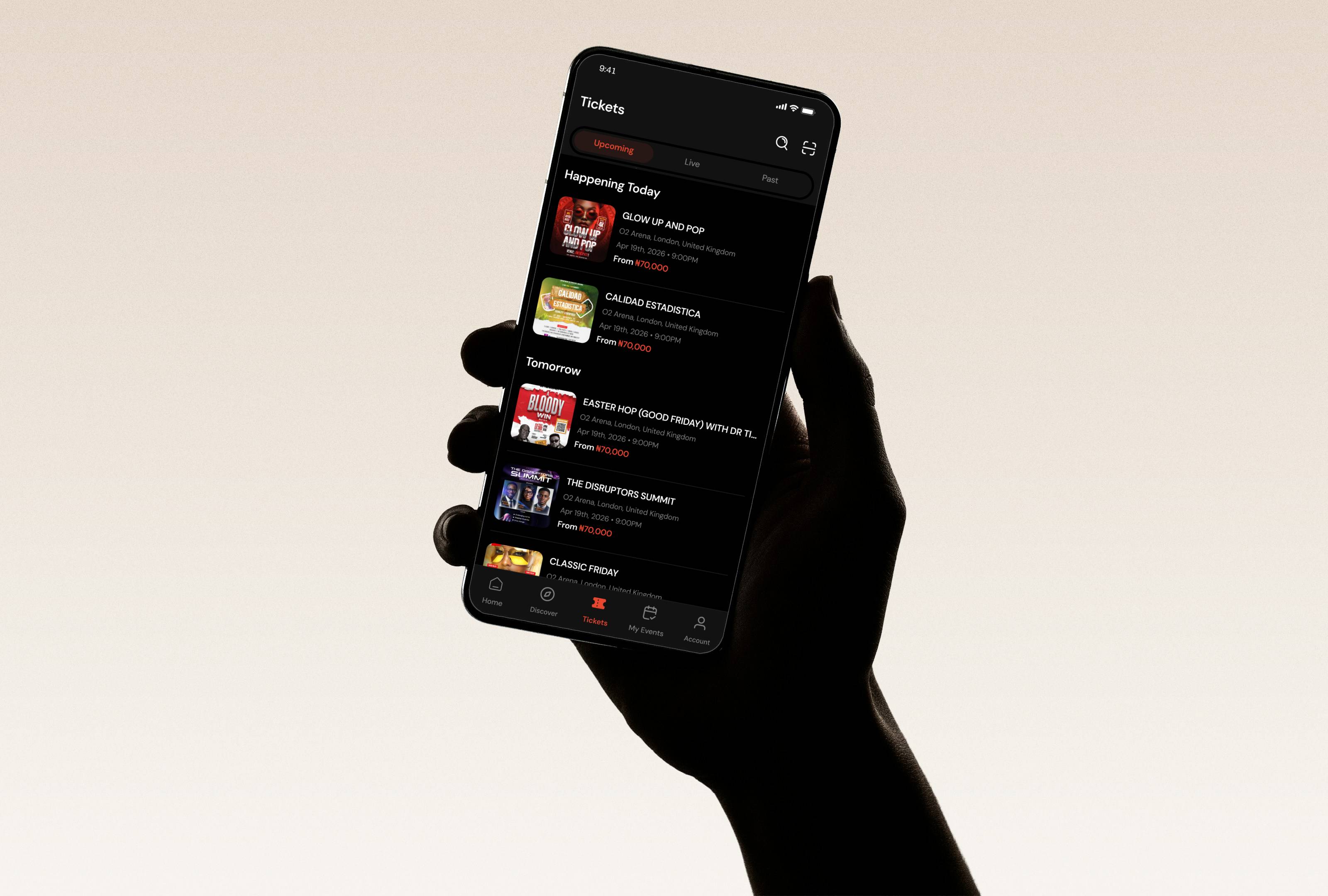
eventrite is a mobile-first ticketing platform that enables users to discover events, purchase secure digital tickets, and manage them seamlessly within a single ecosystem.
Recruitly is a mobile-first, AI-powered, gamified experience that brings together job discovery, application tracking, career tools, and learning for job applicants.
Recruitly is a mobile-first, AI-powered, gamified experience that brings together job discovery, application tracking, career tools, and learning for job applicants.
Problem Statement
Problem Statement
Job seekers lack clarity, feedback, and motivation throughout their journey — leading to inconsistent effort, poor applications, and burnout. At first glance, the problem seemed obvious: people need help finding jobs. But as I dug deeper, I realised that this framing was too surface-level.
The real issue wasn’t access to jobs — it was the lack of structure, feedback, and motivation throughout the process.
Applicants weren’t just struggling to find roles. They were:
Applying without knowing if they were a good fit
Using generic resumes that didn’t stand out
Losing track of applications
Feeling discouraged due to lack of responses
Dropping off because the process felt repetitive and unrewarding
So I reframed the problem into something more meaningful:
Job seekers lack clarity, feedback, and motivation throughout their journey — leading to inconsistent effort, poor applications, and burnout. At first glance, the problem seemed obvious: people need help finding jobs. But as I dug deeper, I realised that this framing was too surface-level.
The real issue wasn’t access to jobs — it was the lack of structure, feedback, and motivation throughout the process.
Applicants weren’t just struggling to find roles. They were:
Applying without knowing if they were a good fit
Using generic resumes that didn’t stand out
Losing track of applications
Feeling discouraged due to lack of responses
Dropping off because the process felt repetitive and unrewarding
So I reframed the problem into something more meaningful:
How might I design a job search experience that continuously guides users, improves their application quality, and keeps them motivated through visible progress?
How might I design a job search experience that continuously guides users, improves their application quality, and keeps them motivated through visible progress?
MY ROLE
MY ROLE
In this project, I worked as a Product Designer. I was responsible for shaping the experience end-to-end — from defining how users (applicants) enter the product, to how they take action, to how they reflect on their progress.
I was also responsible for structuring the user journey, designing interaction flows, thinking through how AI fits naturallly into the experience, creating a gamification system that actually supports user behavior and writing UX copy that feels encouraging.
In this project, I worked as a Product Designer. I was responsible for shaping the experience end-to-end — from defining how users (applicants) enter the product, to how they take action, to how they reflect on their progress.
I was also responsible for structuring the user journey, designing interaction flows, thinking through how AI fits naturallly into the experience, creating a gamification system that actually supports user behavior and writing UX copy that feels encouraging.
MY APPROACH
MY APPROACH
Before I designed anything, I wanted to understand how applicants actually behave when they’re job searching — not how we assume they behave.
From my conversations and survey insights, I started noticing something important. Applicants don’t follow a clean, linear process. They jump between actions. They apply impulsively sometimes. They delay improvements. They avoid things that feel difficult, like rewriting their resume.
So instead of designing a rigid flow, I built my approach around supporting real, messy behavior.
Before I designed anything, I wanted to understand how applicants actually behave when they’re job searching — not how we assume they behave.
From my conversations and survey insights, I started noticing something important. Applicants don’t follow a clean, linear process. They jump between actions. They apply impulsively sometimes. They delay improvements. They avoid things that feel difficult, like rewriting their resume.
So instead of designing a rigid flow, I built my approach around supporting real, messy behavior.
How might I design a job search experience that not only helps users (applicants) find and apply to jobs, but continuously guides them, improves their application quality, and keeps them motivated through visible progress using AI?
How might I design a job search experience that not only helps users (applicants) find and apply to jobs, but continuously guides them, improves their application quality, and keeps them motivated through visible progress using AI?
User Stories — The human needs behind every decision
User Stories — The human needs behind every decision
Throughout the process, I kept coming back to a few core user needs that shaped my decisions.
Throughout the process, I kept coming back to a few core user needs that shaped my decisions.
Entry-Level Graduate (Product Designer)
Tolulope is a 23 years old entry-level product designer she had just completed a UX bootcamp and she is applying for junior product design roles.
Tolulope is a 23 years old entry-level product designer she had just completed a UX bootcamp and she is applying for junior product design roles.
Key user stories
Key user stories
As a first-time job seeker, I want a clear structure to follow during my job search, so I don’t feel lost or overwhelmed by the process.
As a first-time job seeker, I want a clear structure to follow during my job search, so I don’t feel lost or overwhelmed by the process.
As a junior designer, I want guidance on how to improve my resume and portfolio, so I can stand out even without years of experience.
As a junior designer, I want guidance on how to improve my resume and portfolio, so I can stand out even without years of experience.
Junior Frontend Developer
Daniel is a 25 years old junior frontend developer. He has 1–2 years experience and he is currently struggling to get callbacks for roles he applied to.
Daniel is a 25 years old junior frontend developer. He has 1–2 years experience and he is currently struggling to get callbacks for roles he applied to.
Key user stories
Key user stories
As someone who has applied to many jobs without responses, I want feedback on my resume, so I can understand what I’m doing wrong and improve.
As someone who has applied to many jobs without responses, I want feedback on my resume, so I can understand what I’m doing wrong and improve.
As a frontend developer, I want to know how well my skills match a job before applying, so I can focus on roles where I actually have a chance.
As a frontend developer, I want to know how well my skills match a job before applying, so I can focus on roles where I actually have a chance.
Career Switcher (From customer support to product manager)
Aisha is a 28 years senior-level customer support agent with 6 years of experience. She is looking to transitioning into product management and get a role as a product manager.
Aisha is a 28 years senior-level customer support agent with 6 years of experience. She is looking to transitioning into product management and get a role as a product manager.
Key user stories
Key user stories
As someone switching careers, I want to understand which of my existing skills are transferable, so I can confidently apply to new roles.
As someone switching careers, I want to understand which of my existing skills are transferable, so I can confidently apply to new roles.
As a career switcher, I want personalized learning recommendations, so I can close my skill gaps while actively applying for jobs.
As a career switcher, I want personalized learning recommendations, so I can close my skill gaps while actively applying for jobs.
SOLUTIONS (UI DESIGNS)
SOLUTIONS (UI DESIGNS)
I thought about how each part of the product could connect and reinforce the other to create a sense of continuous progress. So instead of designing standalone tools, I designed a set of interconnected experiences, each solving a specific problem I had observed during my research.
I thought about how each part of the product could connect and reinforce the other to create a sense of continuous progress. So instead of designing standalone tools, I designed a set of interconnected experiences, each solving a specific problem I had observed during my research.

Guided onboarding that feels like setting direction, not filling forms
Guided onboarding that feels like setting direction, not filling forms
From my earlier exploration, I understood that discovery isn’t just about showing events. It’s about helping users quickly decide if the event is worth their time and money. So, I designed a location-aware discovery feed that prioritises relevance from the start.
From my earlier exploration, I understood that discovery isn’t just about showing events. It’s about helping users quickly decide if the event is worth their time and money. So, I designed a location-aware discovery feed that prioritises relevance from the start.
Users can browse events near them, filter by (category, date, time and price) and quickly scan event cards with key infomation
Users can browse events near them, filter by (category, date, time and price) and quickly scan event cards with key infomation
Smart job discovery with AI-powered match and reasoning
Smart job discovery with AI-powered match and reasoning
Rather than presenting users with endless job listings, I focused on helping them make better decisions. Each job recommendation comes with a match score and contextual explanation, helping users understand why a role fits them. This reduces guesswork and helps them focus their energy on opportunities that actually align with their skills and goals. This directly addresses the problem I saw where users were applying blindly without confidence.
Rather than presenting users with endless job listings, I focused on helping them make better decisions. Each job recommendation comes with a match score and contextual explanation, helping users understand why a role fits them. This reduces guesswork and helps them focus their energy on opportunities that actually align with their skills and goals. This directly addresses the problem I saw where users were applying blindly without confidence.
Frictionless application flow that encourages action
Frictionless application flow that encourages action
One thing I noticed during research is that even small friction points can delay or stop users from applying. So I simplified the application flow by introducing pre-filled profile data, easy resume and cover letter attachment and quick apply options. But beyond just making it easy, I reinforced action with subtle feedback and encouragement, so users feel like they’re moving forward, not just clicking through steps.
One thing I noticed during research is that even small friction points can delay or stop users from applying. So I simplified the application flow by introducing pre-filled profile data, easy resume and cover letter attachment and quick apply options. But beyond just making it easy, I reinforced action with subtle feedback and encouragement, so users feel like they’re moving forward, not just clicking through steps.
Application tracking system that makes effort visible
Application tracking system that makes effort visible
A major gap in the current experience is what happens after users apply. To solve this, I designed an application tracker that gives users a clear view of what they have applied to, the current status of each application and when to follow up. Instead of feeling like their efforts disappear into a void, users now have a structured pipeline they can manage. This transforms job searching from something reactive into something intentional.
A major gap in the current experience is what happens after users apply. To solve this, I designed an application tracker that gives users a clear view of what they have applied to, the current status of each application and when to follow up. Instead of feeling like their efforts disappear into a void, users now have a structured pipeline they can manage. This transforms job searching from something reactive into something intentional.
Resume & career tools that drive continuous improvement
Resume & career tools that drive continuous improvement
I integrated a set of career tools directly into the experience, including resume builder and optimizer, cover letter generator, linkedin headline generator. But what mattered more than the tools themselves was the feedback. Users receive a resume score and actionable suggestions, which helps them understand where they’re falling short and how to improve. This creates a feedback loop where users aren’t just applying — they’re improving with every step.
I integrated a set of career tools directly into the experience, including resume builder and optimizer, cover letter generator, linkedin headline generator. But what mattered more than the tools themselves was the feedback. Users receive a resume score and actionable suggestions, which helps them understand where they’re falling short and how to improve. This creates a feedback loop where users aren’t just applying — they’re improving with every step.
AI copilot that guides users without taking control
AI copilot that guides users without taking control
The AI layer was one of the most important parts of the product for me. I designed it to act less like a chatbot and more like a career guide that’s always present in the background. It helps users identify which jobs to apply to, improve their applications and stay consistent through nudges and reminders.
What I was very intentional about here was balance. The AI suggests and explains, but it never takes over. Users always remain in control, which helps build trust while still benefiting from guidance.
The AI layer was one of the most important parts of the product for me. I designed it to act less like a chatbot and more like a career guide that’s always present in the background. It helps users identify which jobs to apply to, improve their applications and stay consistent through nudges and reminders.
What I was very intentional about here was balance. The AI suggests and explains, but it never takes over. Users always remain in control, which helps build trust while still benefiting from guidance.
Results & Impacts
What excites me most about this product is the shift it creates in how users approach job searching. Instead of feeling like they’re just sending applications into a void, they start to see a pattern. They begin to understand what works, what doesn’t, and where they need to improve.
That alone changes their confidence. From a behavioral standpoint, the product encourages consistency. Users are more likely to return, not because they have to, but because they feel like they’re making progress.
And from a product perspective, that leads to stronger engagement, deeper trust, and a more meaningful experience overall.
What excites me most about this product is the shift it creates in how users approach job searching. Instead of feeling like they’re just sending applications into a void, they start to see a pattern. They begin to understand what works, what doesn’t, and where they need to improve.
That alone changes their confidence. From a behavioral standpoint, the product encourages consistency. Users are more likely to return, not because they have to, but because they feel like they’re making progress.
And from a product perspective, that leads to stronger engagement, deeper trust, and a more meaningful experience overall.
Conclusion
This project made me rethink what it means to design for real life. It reminded me that users don’t just need tools, they need support. They need clarity. They need to feel like their effort is going somewhere. And that shifted how I approached everything.
This project made me rethink what it means to design for real life. It reminded me that users don’t just need tools, they need support. They need clarity. They need to feel like their effort is going somewhere. And that shifted how I approached everything.
Next Steps
If I had the opportunity to take this further, I’d focus on making the system even more adaptive. I’d explore deeper personalization within the AI, allowing it to better understand user behavior over time and anticipate needs before they arise. I’d also want to build out interview preparation, because that’s the next major challenge users face after applying.
And finally, I’d look into introducing a layer of human feedback — whether from recruiters or peers — to complement the AI and make the experience even more grounded.
If I had the opportunity to take this further, I’d focus on making the system even more adaptive. I’d explore deeper personalization within the AI, allowing it to better understand user behavior over time and anticipate needs before they arise. I’d also want to build out interview preparation, because that’s the next major challenge users face after applying.
And finally, I’d look into introducing a layer of human feedback — whether from recruiters or peers — to complement the AI and make the experience even more grounded.


2023
Mobile App
Eventrite
Mobile-first ticketing platform that enables users to discover events, purchase secure digital tickets.

2023
Web App
Eventrite - webapp
Web-based event creation and management platform for organizers to plan, launch, and actively manage events in real-time.

2023
Mobile App
Ridely
Mobile-first delivery experience for riders handling logistics.
Let's connect
UX DESIGN
PRODUCT DESIGN
UI DESIGN
Designs
Contacts
Let's connect
UX DESIGN
PRODUCT DESIGN
UI DESIGN
Designs
Contacts
Let's connect
UX DESIGN
PRODUCT DESIGN
UI DESIGN
Designs
Contacts
Let's connect
UX DESIGN
PRODUCT DESIGN
UI DESIGN
Designs
Contacts